
Romantic trips often center around an event, like a honeymoon or anniversary. But now a recent survey finds a new category of romantic travel: the “just because” trip.
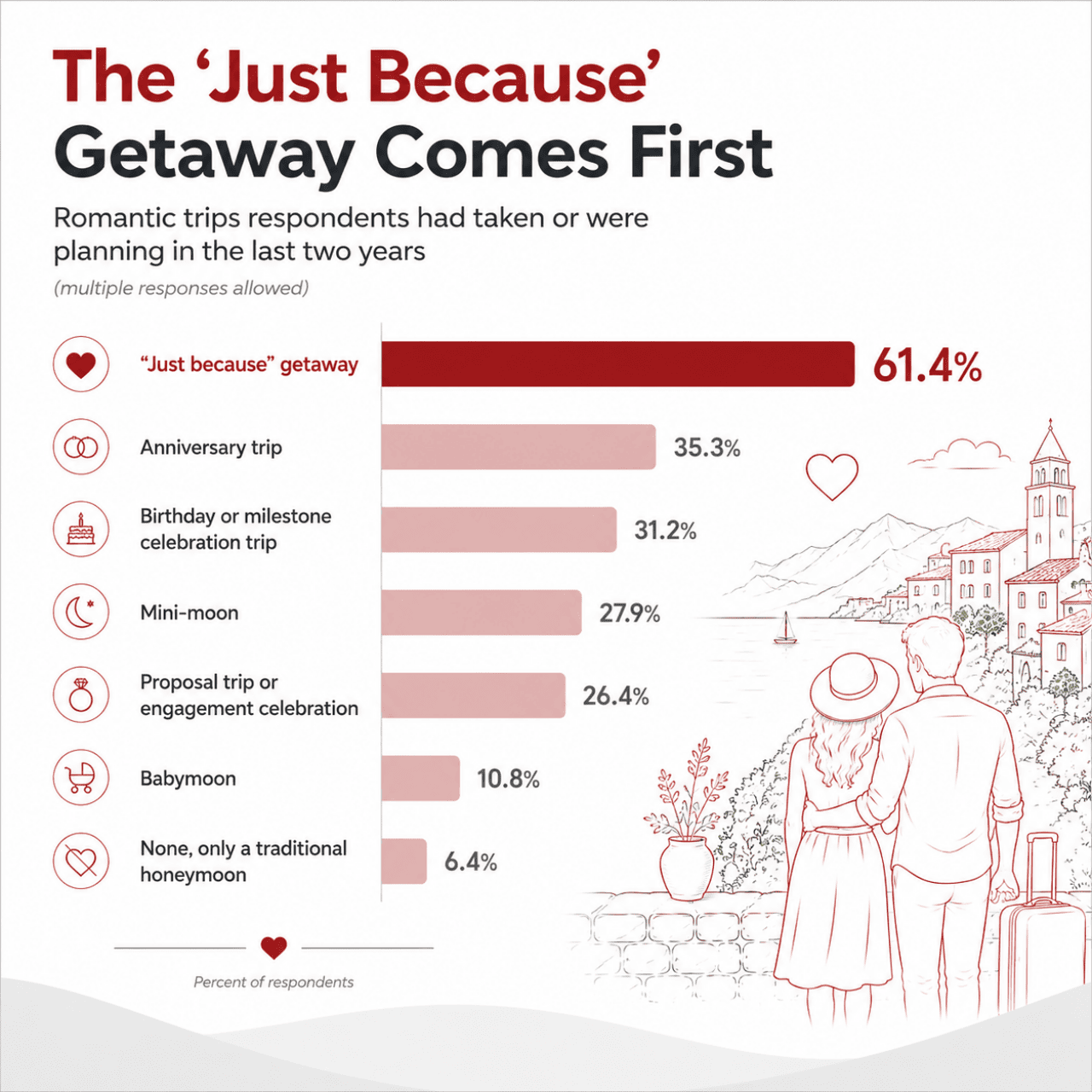
A JayWay Travel survey of 1,000 U.S. adults found that 61.4% of couples have taken or are planning a spontaneous romantic getaway with no specific occasion attached. The category now dwarfs anniversary trips (35.3%), mini-moons (27.9%), and proposal trips (26.4%). What used to be “Plan C” is now the main option.
When asked which romantic trips they’d taken or were planning in the last two years, the majority of respondents named the “just because” getaway (respondents could select multiple categories):
It’s worth being clear about what “just because” actually means here. These aren’t necessarily last-minute trips.
More than 7 in 10 (72.7%) couples plan major romantic trips between three and 12 months out, and only 3.1% describe themselves as truly spontaneous bookers. What defines the “just because” category is the absence of a triggering event on the calendar.
The travel industry has noticed. In Parade’s 2026 romance feature, travel authors Kathryn Romeyn and Kelli Acciardo, whose new book “The Bucket List Romantic Escapes” was published in March, told couples to stop waiting for round-number anniversaries.
“There’s no greater adrenaline rush than booking a spur-of-the-moment trip,” Acciardo said. The survey suggests couples have already gotten the message.
For younger couples, milestone travel is no longer reserved for the big stuff. At least 2 in 5 (43%) Gen Z respondents said finishing a major life goal, like paying off debt or buying a home, was worth celebrating with a couple’s trip. Among Baby Boomers, that number was 8.7%.
Career achievements show a similar split. More than a third (35.5%) of Gen Z say a promotion or new job earns a trip, compared with 8.7% of Boomers. The pattern suggests the category of life events that warrant celebratory travel has quietly expanded for younger couples.
For a generation that came of age watching housing markets and student debt redefine what adulting looks like, smaller wins carry weight that previous generations might have reserved for retirements or 25-year anniversaries.
This tracks with broader generational data. Fortune recently described millennials as the inventors of the experience economy and Gen Z as the ones reinventing travel itself.
Romance trips fit neatly into that pattern: They’re personal, share-worthy, and easy to attach to almost any life moment a couple wants to mark.
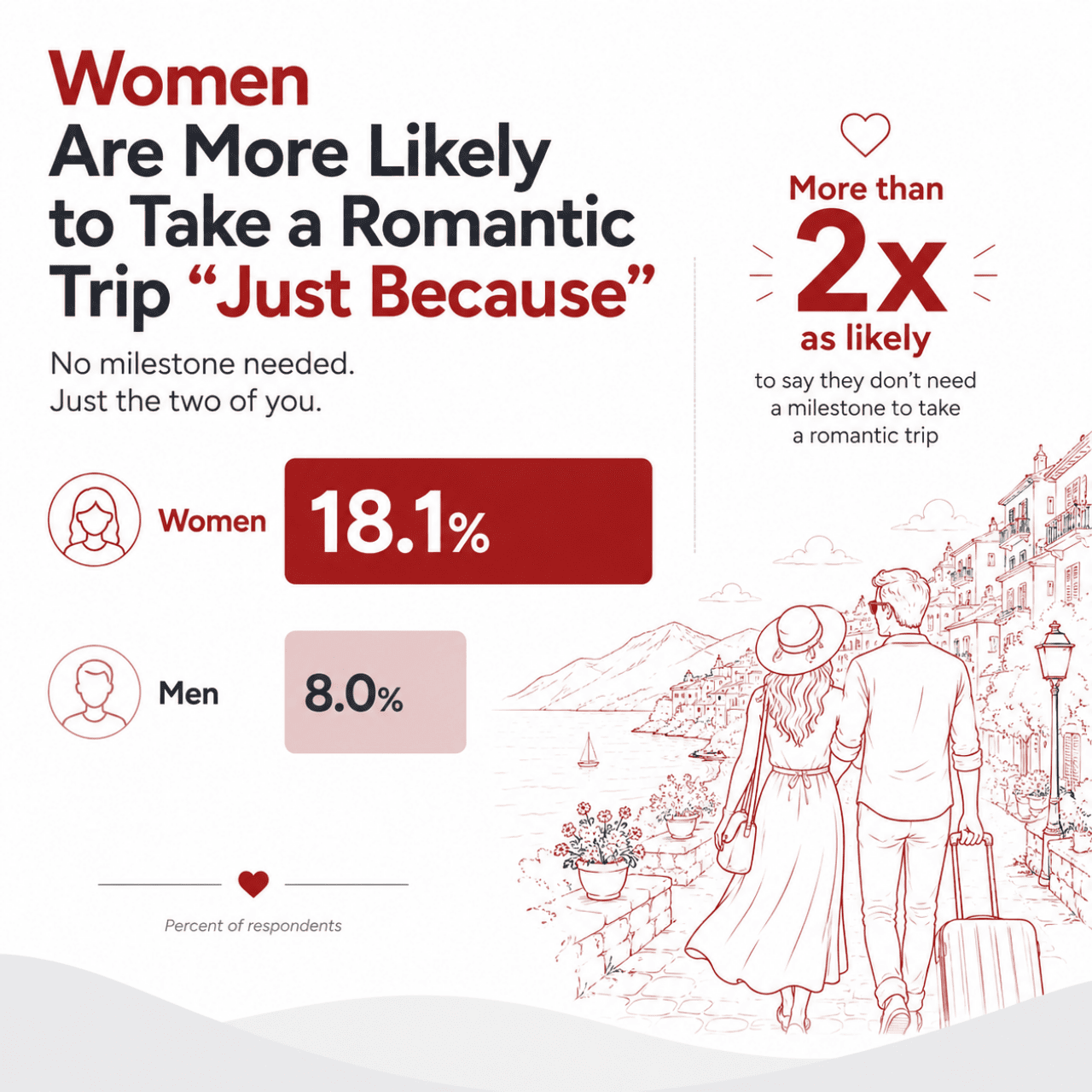
Women are typically the household members carrying the heavier mental load, whether it be tracking calendars, anticipating logistics, or accounting for what could go wrong before it does. That makes the survey’s findings on spontaneity all the more striking. The survey says:
Yet there’s a tension that comes with spontaneity: Women say they want to travel more freely, and they’re also the demographic most likely to name cost as the barrier stopping them (47.1% versus 37.2% of men).
The spontaneity isn’t unlimited but filtered through a sharper awareness of what the trip is going to cost and who’s keeping track of it.
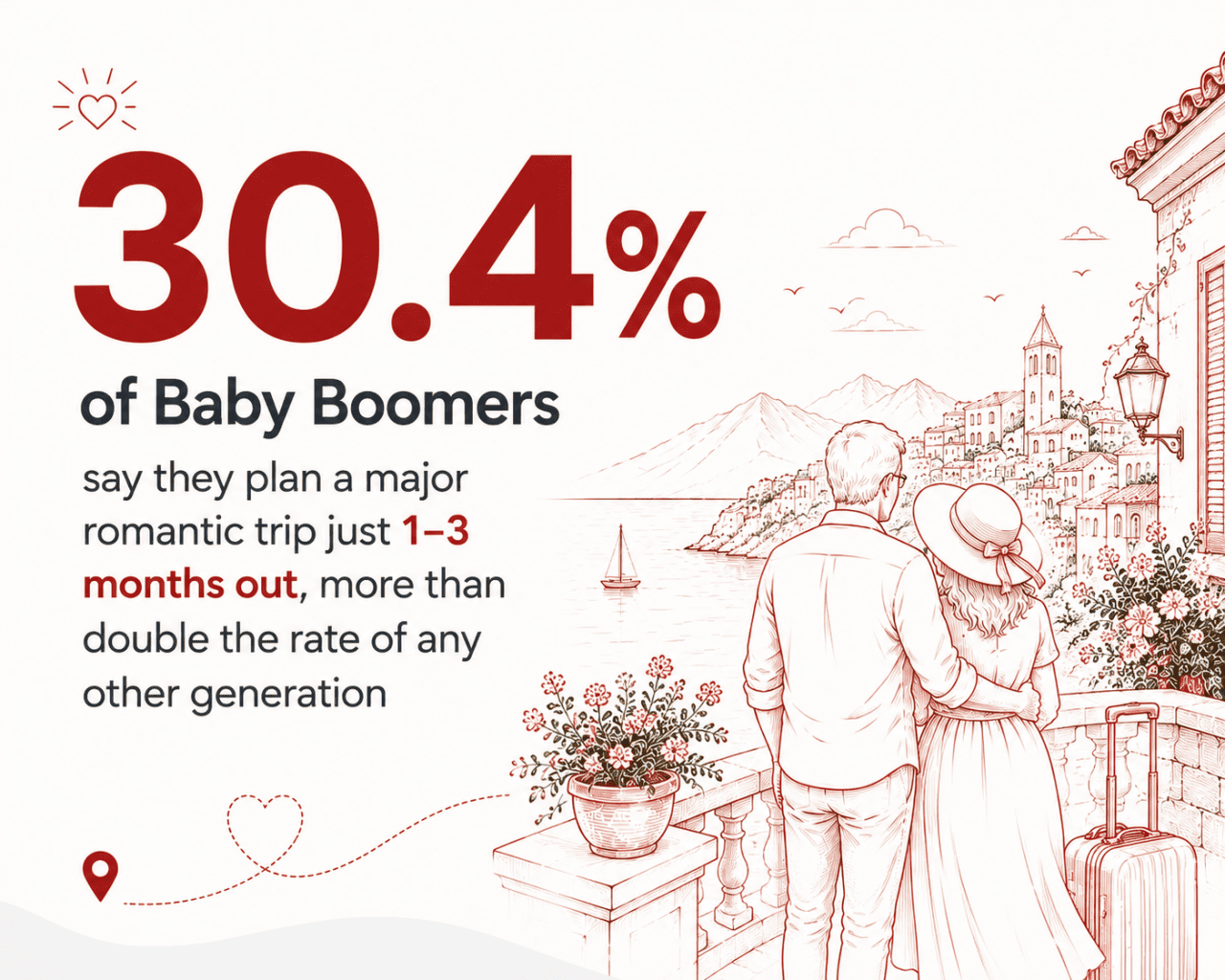
Nearly a third (30.4%) of Baby Boomers say they plan a major romantic trip just one to three months out, more than double the rate of any other generation. Part of the explanation could be more freedom.
By your 60s, the work and family constraints that force advance planning have mostly fallen away. What looks like spontaneity is often just being able to leave when you want to.
The bigger drivers are financial and structural. Baby Boomers feel financial pressure more than any other generation, with 56.5% naming it as their biggest barrier.
They also prefer shorter trips, with 52.2% picking two to three nights as their ideal romantic getaway. A long weekend within driving distance is far easier to book on short notice than a week abroad. The whole pattern fits together: A short, flexible, price-sensitive trip doesn’t require six months of planning, and Boomers know it.
The pattern raises practical questions for the travel industry. Most booking platforms build inventory and pricing strategies around six-month booking windows. Yet a meaningful share of one of the highest-spending demographics operates on an entirely different timeline.
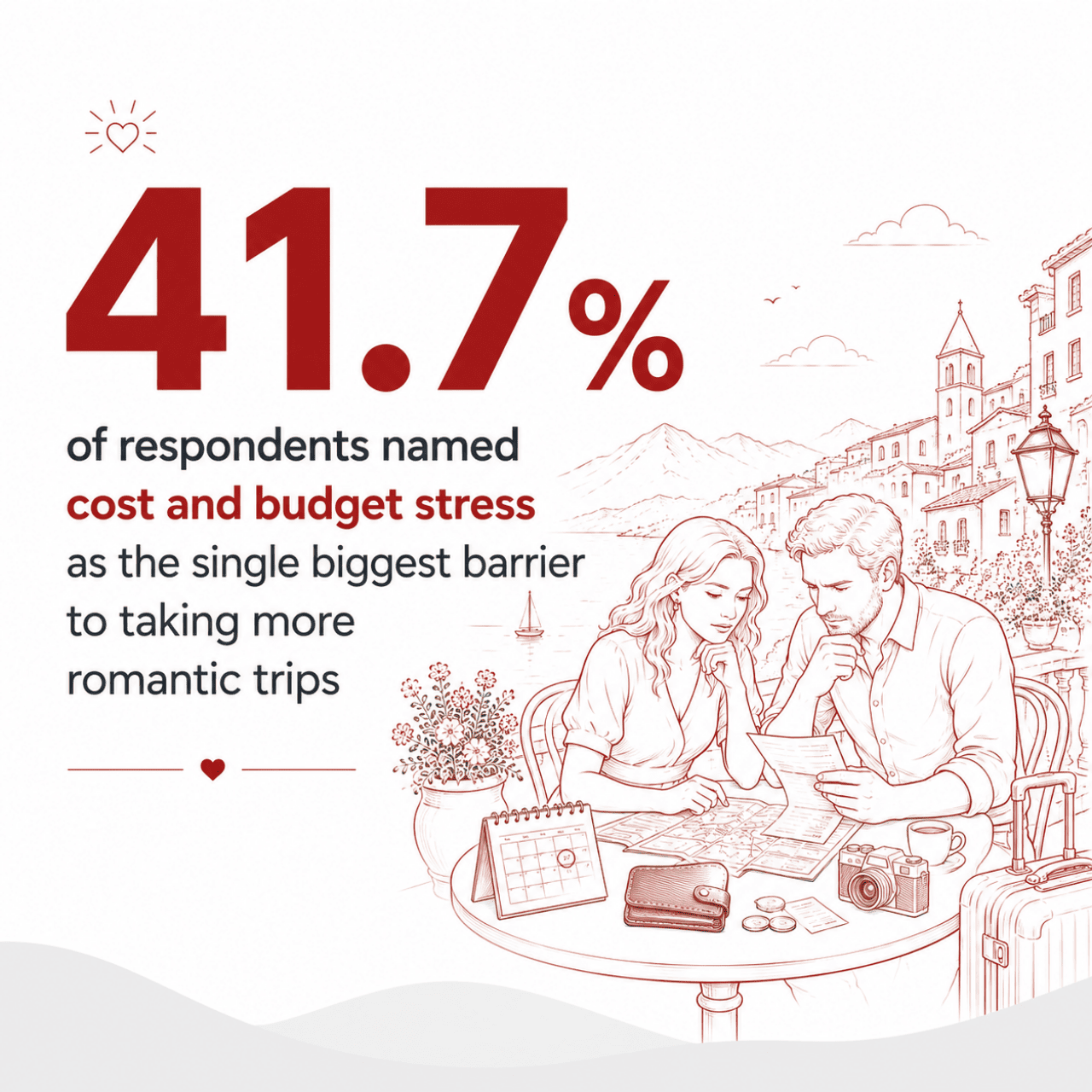
Two in 4 (41.7%) respondents named cost and budget stress as the single biggest barrier to taking more romantic trips. The second-place answer, not enough PTO, sat at 21.6%.
The pressure isn’t felt evenly:
The financial pressure also shows up in how couples qualify their own beliefs. While 96.2% of respondents agree that romantic trips matter more than spending on material things, only 53.2% strongly agree.
The other 43% chose “somewhat agree, but it depends on our financial situation.” Nearly half the respondents believe in experience over things in principle and adds a financial asterisk in practice.
Couples are adjusting to the pressure. NerdWallet’s |2026 Summer Travel Report” found that 89% of this year’s summer travelers are actively taking action to keep costs down, with 35% driving instead of flying and 33% choosing lodging based on price rather than amenities.
The picture that emerges across the two datasets is of couples who still want the trip but are increasingly willing to redesign it to make it happen.
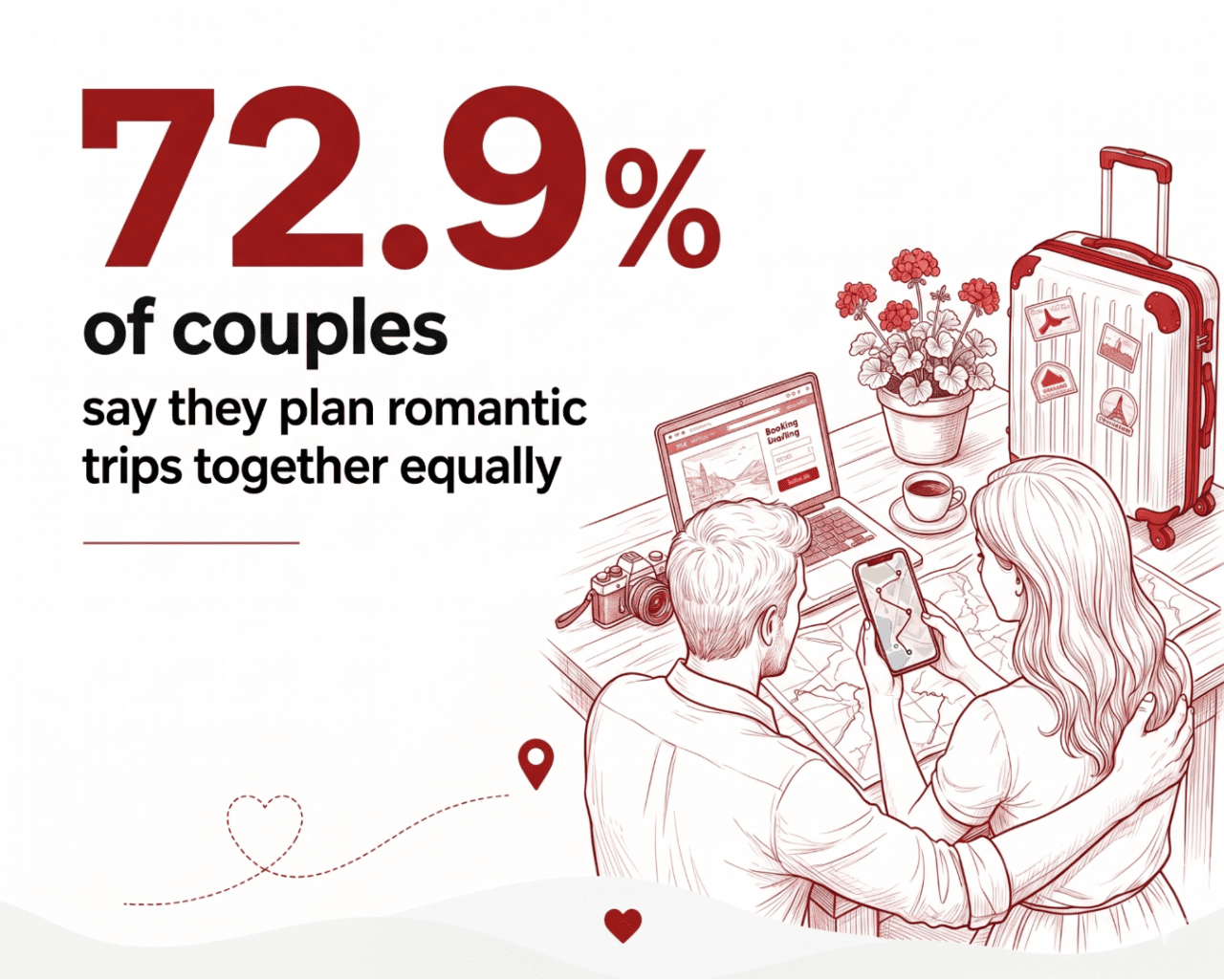
Nearly 3 in 4 (72.9%) couples say they plan romantic trips together equally. The agreement runs deeper than logistics. Across all respondents, the experience-over-things belief holds across every generation, gender, and income level the survey measured.
Postgraduate professionals lead the “strongly agree” camp at 60.9%, but no demographic group dipped below 43% on strongly agreeing. The sentiment isn’t a Gen Z thing or a wealthy household thing. It’s a shared baseline.
That baseline sits inside what economists call the experience economy, the documented consumer shift toward spending on experiences rather than physical goods that has been building since the early 2010s. Romantic travel is one of the places where this behavior is seen in action.
Honeymoons still happen, but they’re now one of several romantic trips couples take over the course of a relationship. The generational arc is what makes the shift feel real rather than situational.
When asked to prioritize a single romantic trip in the next two years, every generation picked the “just because” escape over a big international honeymoon, but the margin widens dramatically with age.
Gen Z splits evenly between the two (31.2% each). Millennials lean slightly toward “just because” (31.9% versus 28.4%). Gen X is decisively there (47.2% versus 16.1%). Baby Boomers are all the way over (69.6% versus 0%).
The reason for the trip has become less important than the trip itself.
To understand how Americans approach romantic travel, JayWay Travel surveyed 1,000 U.S. adults across the country in March 2026 about their honeymoon experiences, anniversary travel habits, and “just because” romantic getaways.
Participants answered a series of questions about what makes a romantic trip meaningful, how often they take them, what stops them, and how their planning has evolved.
Responses were analyzed by gender, generation, household income, and education level to identify trends and disparities across demographic groups.
This story was produced by JayWay Travel and reviewed and distributed by Stacker.



