
A playground is more than just a place where kids come to play. It’s where they build confidence, exercise their imagination, and make friends. Playgrounds are also where communities gather and families create memories that last a lifetime. These and many more reasons establish them as a worthy addition to a community, school, or park.
Bringing your dream playground to life requires more than just a vision. Thoughtful planning and creative strategies are key to funding it. When you approach your project with inventive foresight, you can make your vision a reality while creating a space that serves generations.
Whether you’re starting a playground from scratch or upgrading an existing one, you need to understand how to go about funding. This detailed guide from Little Tikes Commercial outlines the essential funding pathways for your project and provides the insights you need to create a lasting play space.
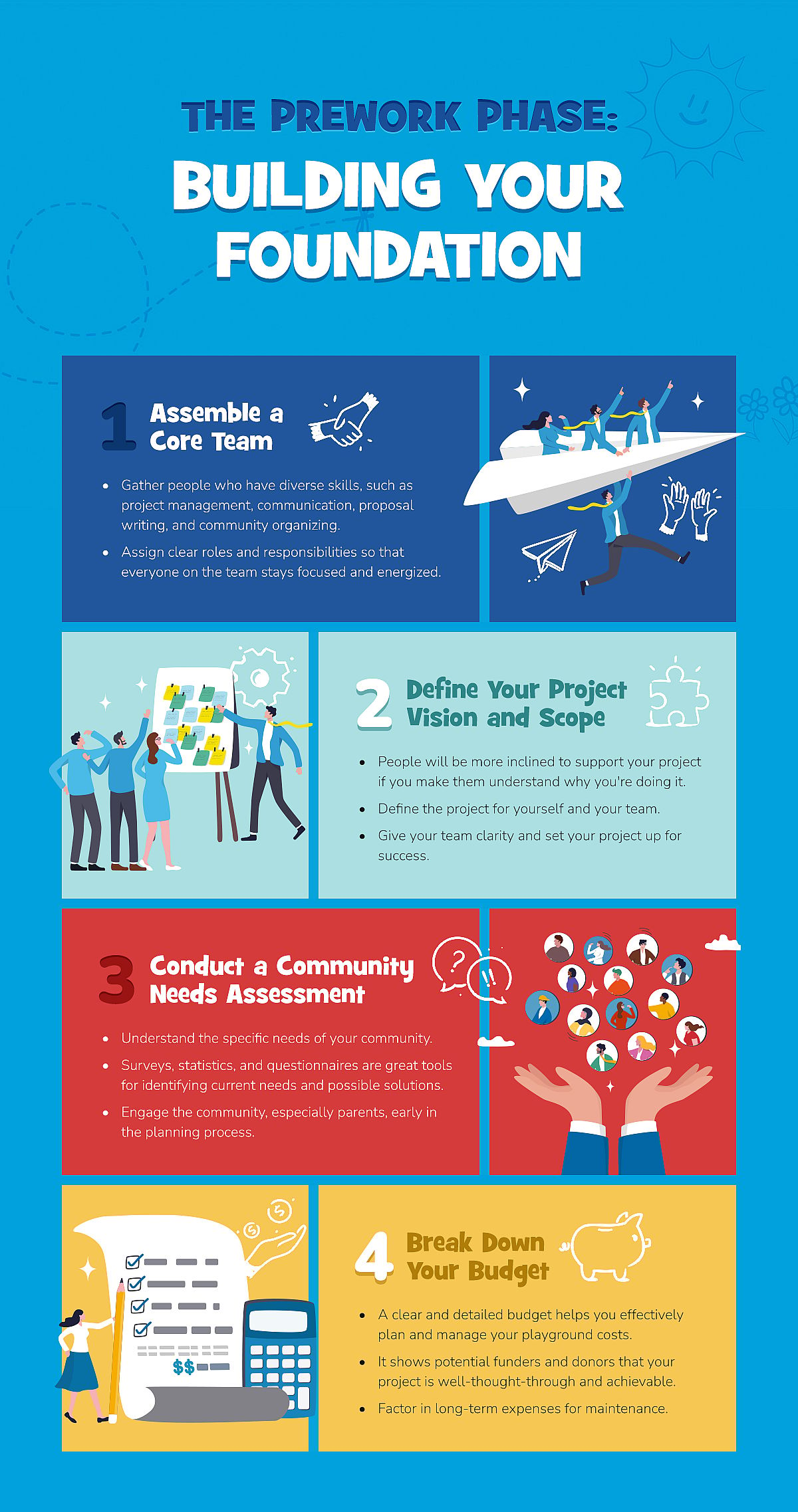
Before you start exploring strategies to fund your dream playground, you should lay the necessary groundwork. This prework phase is essential for creating a well-defined and sustainable foundation for your project. Below are some steps to take before you start anything else.
Assemble a Core Team
Raising funds is far more effective when you have a team of individuals as passionate about your playground project as you are. A dedicated team can share the workload and bring fresh ideas to the table.
Start by gathering people who have diverse skills, such as project management, communication, proposal writing, and community organizing. Assign clear roles and responsibilities so that everyone on the team stays focused and energized.
With a dream team in place, playground fundraising becomes a collaborative effort rather than a challenge you tackle alone.
Define Your Project Vision and Scope
People will be more inclined to support your project if you make them understand why you’re doing it. Start by defining the project for yourself and your team. What problem will the playground solve? What benefits will it bring to the community? What kind of equipment will the playground have? By answering these questions, you can give your team clarity and set your project up for success.
Conduct a Comprehensive Community Needs Assessment
Understanding the specific needs of your community or school is a vital step to creating a playground that truly makes a difference. Begin by collecting data to demonstrate the project’s relevance to potential donors. Surveys, statistics, and questionnaires are great tools for identifying current needs and possible solutions.
It’s good practice to engage the community, especially parents, early in the planning process. When people feel more involved in the process, they’ll be more likely to offer their support through donations or volunteering. By engaging early, you can obtain formal letters of endorsement from local leaders, schools, and community organizations. Such endorsements add significant weight to grant applications and sponsorship requests.
Break Down Your Budget
A clear and detailed budget helps you effectively plan and manage your playground costs. It also shows potential funders and donors that your project is well thought through and achievable.
Beyond the cost of play equipment, break down your budget for other essential project costs, such as installation, safety surfacing, permits and approvals, and site amenities. It’s advisable to factor in long-term expenses for repairs and maintenance — most funders are interested in sustainability as much as they are in building.
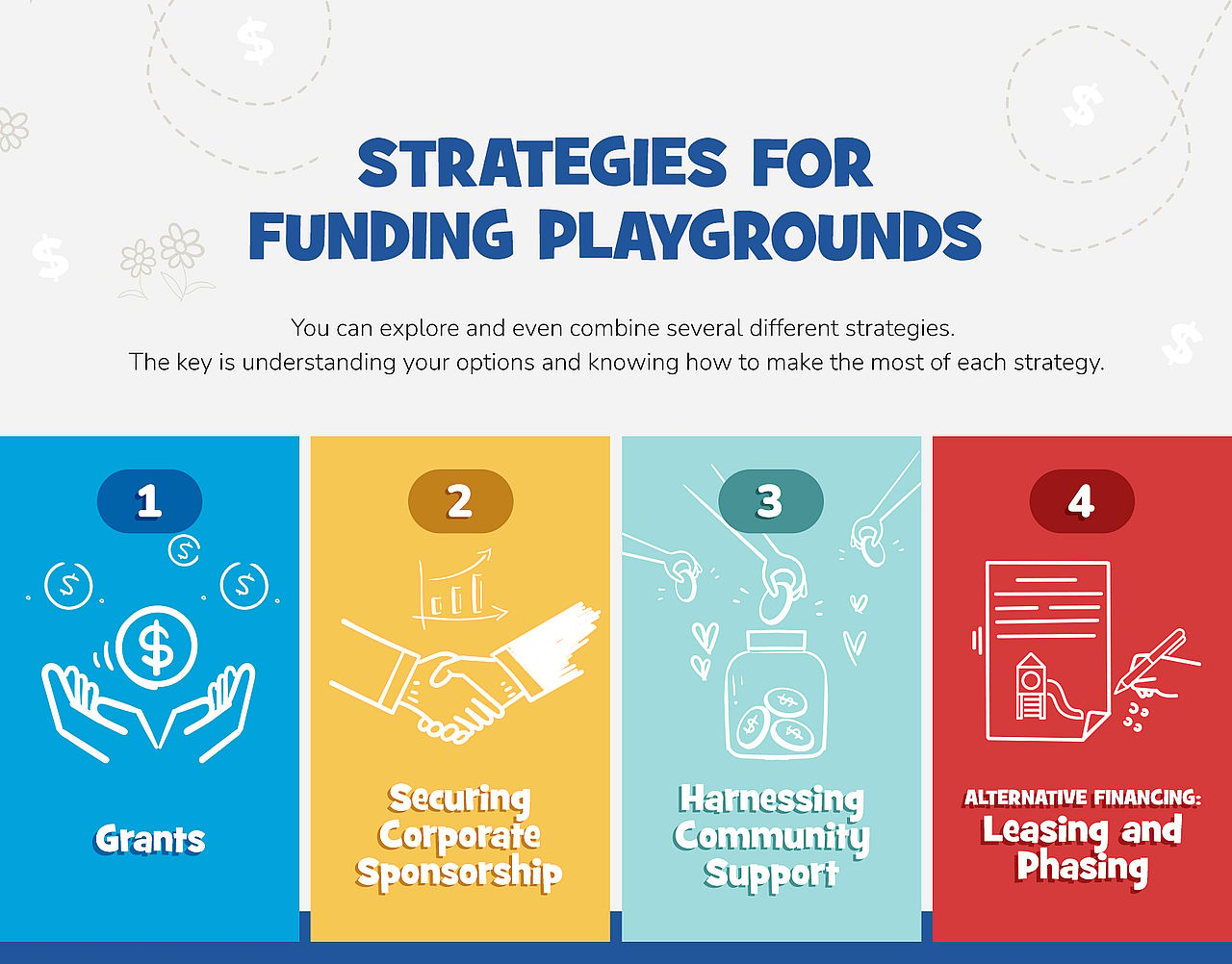
Various strategies are available for playground funding. You can explore and even combine several different strategies. The key is understanding your options and knowing how to make the most of each strategy.
Grants are an effective funding strategy, especially if you know where to look for them and how to apply. Essentially, they are funds granted by organizations to support defined projects. Several organizations are often eligible for grants, including public and private schools, faith-based organizations, and HOAs.
Some benefits that come with grants include:
Types of Grants You Can Apply For
There are three main types of grants you can apply for to fund your playground:
How to Apply for a Grant
The requirements for each grant type may vary. However, it’s always helpful to have a defined process in place. Here are some essential guidelines to follow:
This funding strategy is based on mutually beneficial partnerships. Through corporate sponsorships, companies support playground construction in exchange for enhanced brand presence and community goodwill. This is different from companies that offer grants to demonstrate their corporate social responsibility without expecting tangible benefits. Companies may provide their support in two ways:
Benefits of Corporate Sponsorships
Corporate sponsorships can benefit your cause in several ways, including:
How to Find Corporate Sponsors to Partner With
If you choose to go this route, you’ll need to be strategic in identifying the right companies to partner with. To help you move things forward seamlessly, you can explore comprehensive funding guides that outline how to identify potential donors, manage relationships, and build successful campaigns. Here are a few additional ways you can go about finding partners:
Thoroughly research potential sponsors to understand their business objectives. This way, you can clearly demonstrate in your proposal how a partnership with your playground will benefit them. It’s also important to know that not every company or brand will be the right fit for your playground project. It’s best to partner only with companies whose values align with yours.
Playgrounds strengthen communities by providing kids and families with a shared place to gather, play, and connect. You’ll be surprised by how members of your community, both locally and online, may be willing to support and contribute resources toward your playground. There are two ways to harness your community’s support — community fundraising and crowdfunding.
Community Fundraising
Community fundraising is an effective strategy you can use to generate funds for your dream playground. It involves reaching out to residents, businesses, and groups to rally for support and secure contributions for your playground project. Here are some community fundraising ideas you can explore:
This strategy goes beyond raising funds. It’s a way to bring the community together to share in the pride of bringing the playground to life.
Crowdfunding
Crowdfunding is a digital-first approach that enables you to raise money from a large number of people both in your community and beyond. Crowdfunding is effective because it gives everyone, regardless of their financial capacity, an opportunity to contribute to your project. You can also showcase your crowdfunding efforts to potential funders who’ll likely find the community support impressive.
The following are some essential steps for setting up a successful crowdfunding campaign:
Benefits of Harnessing Community Support
Engaging the community to build a playground is more than a fundraising strategy. It’s a tactic with several benefits beyond funding, including:
Sometimes, it may be necessary to explore alternative financing options, especially when direct funding, grants, and sponsorships aren’t enough. Let’s discuss some of these options.
Leasing to Own
Instead of a one-time purchase, this option offers access to playground equipment through regular installment payments over a defined period. At the end of a lease term, you’ll typically have different options, including purchasing the equipment for a residual value, renewing the lease, or returning the equipment. Some of the benefits of leasing to own include:
Before exploring this option, consider that the total cost over the lease term may exceed the cost of an outright purchase. Additionally, the lessee is typically responsible for maintenance and insurance costs throughout the period.
Phased Construction
This strategy involves building a playground in phases. To do this, it’s advisable to break the entire project into smaller, manageable stages and raise funds to complete each stage. The plus sides of a phased-construction playground project include:
To successfully realize your dream playground through phasing, careful initial planning is essential. An incohesive plan could lead to undesirable extended timelines.
Funding a playground isn’t without challenges. Understanding potential hurdles helps you prepare to tackle or adapt to them. The following are some common challenges you may encounter.
Intense Competition for Funds
You’re not the only one applying for limited grants and corporate sponsorships — many worthy causes are vying for funding. This imbalance creates intense competition, meaning your playground needs to stand out to be considered.
One way to tackle this challenge is to research the funding organizations thoroughly and craft compelling proposals or pitches that align with their mission and objectives. While this may not guarantee anything, it increases your chances of getting noticed.
Long Timelines and Delays
Some grant application processes take time and involve long review periods. Such lengthy processes can delay your project timelines, often leading to reduced morale. On top of that, delays may result in increased costs over time. While you may not be able to speed up the process, you can start early and explore several options simultaneously.
Declining Engagement and Enthusiasm
The initial excitement of community members or volunteers for a new playground may wane over time, especially for longer projects. Donors and supporters may also grow fatigued and disengage if you ask them for contributions too often. Here are some strategies for maintaining and sustaining enthusiasm:
A playground is a special place that shapes kids’ childhoods. It’s a place of laughter, connection, and lifetime memories. Funding your dream playground transcends merely reaching a goal — it’s about building a happy future for generations to come. By laying the necessary groundwork and exploring the myriad of fundraising strategies and opportunities available, you can bring this vision to life.
This story was produced by Little Tikes Commercial and reviewed and distributed by Stacker.



